8.5 - Leak Repair Requirements and Current Regulatory Updates
Module: Type II High and Very-High-Pressure Appliances
Regulatory verification date: August 12, 2026
Primary current authorities: 40 CFR § 82.157 for Clean Air Act Section 608 leak repair and 40 CFR § 84.106 for AIM Act refrigerant-management leak repair
Current-status note: The eCFR displayed on August 12, 2026 is current through August 10, 2026. Proposed rules are identified separately and are not presented as current requirements.
Course role: Separates current Section 608 ozone-depleting-refrigerant leak-repair requirements from the separate AIM Act HFC/substitute framework, while identifying historical leak-rate values that remain common in older EPA 608 study material
Learning Objectives
After completing this section, a student should be able to:
- State the current applicability of the Clean Air Act Section 608 leak-repair requirements in 40 CFR § 82.157.
- Identify the current Section 608 50-pound full-charge threshold and explain why it must not be confused with older wording such as “more than 50 pounds.”
- State the current Section 608 trigger rates for commercial refrigeration, industrial-process refrigeration, comfort cooling, and other covered appliances.
- Explain the current Section 608 repair, leak-inspection, initial-verification, follow-up-verification, recordkeeping, and chronic-leaker requirements at an examination-preparation level.
- Explain why current Section 608 leak-repair requirements do not apply to appliances containing solely substitute refrigerants such as HFCs.
- Identify the separate AIM Act leak-repair framework in 40 CFR Part 84, Subpart C, effective January 1, 2026.
- State the AIM Act 15-pound full-charge threshold, covered refrigerant categories, principal exclusions, trigger rates, verification requirements, records, and chronic-leaker reporting.
- Distinguish current law from the historical 15% and 35% trigger rates found in older Section 608 study guides.
- Distinguish EPA 608 examination preparation from current field compliance when a modern Type II appliance contains an HFC or another substitute refrigerant.
- Recognize a proposed regulatory change and avoid treating it as effective law before it is finalized and incorporated into the current rule.
Introduction
Leak repair is one of the most easily confused areas in EPA Section 608 preparation because three different layers of information can appear in study materials:
- Historical Section 608 requirements, including the older 15% and 35% leak-rate values.
- Current Section 608 leak-repair requirements for qualifying appliances containing ozone-depleting refrigerants.
- Separate current AIM Act requirements, effective January 1, 2026, for certain appliances containing HFCs or certain HFC substitutes.
A student who memorizes only one set of numbers can easily answer the wrong question.
The most important starting distinction is:
Current Clean Air Act Section 608 leak repair
40 CFR § 82.157
→ qualifying appliances with 50 lb or more
→ class I or class II ODS refrigerant, or blend containing an ODS
while:
Current AIM Act leak repair
40 CFR § 84.106
→ qualifying refrigerant-containing appliances with 15 lb or more
→ refrigerant containing a regulated HFC
   or certain HFC substitutes with GWP > 53
→ subject to stated exclusions
The two frameworks use some similar trigger rates and repair concepts, but they are different regulations with different applicability.
That distinction is especially important in Type II work because the technician may encounter:
- Legacy R-22 commercial refrigeration.
- Existing R-22 comfort-cooling equipment.
- R-134a or R-404A commercial refrigeration.
- R-410A systems.
- Modern lower-GWP HFC blends.
- HFO/HFC blends.
- Refrigerated-transport equipment.
- Residential and light-commercial air-conditioning equipment.
The correct field answer depends on:
- Refrigerant.
- Full charge.
- Appliance application.
- Applicable federal program.
- Current rule status.
Key Concepts
1. Current Section 608 Leak Repair Applies to ODS Appliances
Source: 40 CFR § 82.157(a)
As of April 10, 2020, the leak-repair requirements in 40 CFR § 82.157 apply only to appliances with a full charge of 50 pounds or more of:
- A class I refrigerant.
- A class II refrigerant.
- A refrigerant blend containing a class I or class II refrigerant.
The rule does not apply under § 82.157 to appliances containing solely substitute refrigerants.
Therefore:
50 lb or more of ODS refrigerant
→ evaluate current Section 608 leak-repair requirements
but:
HFC-only appliance
→ current § 82.157 Section 608 leak-repair rule does not apply
→ check separate current AIM Act requirements
This does not mean that substitute refrigerants are generally unregulated under Section 608.
Other Section 608 provisions can still apply to substitutes, including requirements related to:
- Technician certification.
- Venting.
- Recovery.
- Evacuation.
- Recovery equipment.
- Sales.
- Reclamation.
- Safe disposal.
The narrow point is:
The current leak-repair rule at § 82.157 has ODS-specific applicability.
2. Current Section 608 Full-Charge Threshold Is 50 Pounds or More
Source: 40 CFR § 82.157(a)
The current legal threshold is:
50 pounds or more
not:
more than 50 pounds
For example:
| Appliance Full Charge | Current § 82.157 Leak-Repair Applicability Based on Charge Alone |
|---|---|
| 49 lb | Below the § 82.157 full-charge threshold |
| 50 lb | Meets the § 82.157 full-charge threshold |
| 75 lb | Meets the § 82.157 full-charge threshold |
| 500 lb | Meets the § 82.157 full-charge threshold |
The refrigerant must also satisfy the ODS applicability requirement.
Some EPA examination-topic wording and older study material may say “more than 50 pounds.” For current regulatory precision, this project uses the controlling eCFR wording:
50 pounds or more.
3. Current Section 608 Trigger Rates
Source: 40 CFR § 82.157(c)(2)
For qualifying § 82.157 appliances, the current annual leak-rate trigger categories are:
| Appliance Category | Current Section 608 Trigger Rate |
|---|---|
| Industrial-process refrigeration | 30% |
| Commercial refrigeration | 20% |
| Comfort cooling | 10% |
| Other covered appliances | 10% |
These rates describe the calculated percentage of the appliance’s full charge that would be lost over the applicable 12-month leak-rate basis.
The examination relationship to memorize is:
IPR
→ 30%
Commercial refrigeration
→ 20%
Comfort cooling / other covered appliances
→ 10%
Do not use:
35% / 35% / 15%
as the current Section 608 values.
Those are historical values and are discussed later in this section.
4. The Trigger Rate Depends on Appliance Application
Source: 40 CFR § 82.157(c)(2)
Do not select a trigger rate based only on:
- Refrigerant.
- Physical size.
- Compressor horsepower.
- Building type.
The application category matters.
Industrial-Process Refrigeration
Current Section 608 trigger:
30%
Industrial-process refrigeration includes complex customized refrigeration appliances directly linked to industrial processes such as:
- Chemical manufacturing.
- Pharmaceutical manufacturing.
- Petrochemical processing.
- Manufacturing.
- Industrial ice machines.
- Refrigeration directly used in electricity generation.
- Ice rinks.
Where one appliance serves both industrial-process refrigeration and another application, the classification is treated as industrial-process refrigeration when 50% or more of its operating capacity is used for the industrial-process refrigeration purpose.
Commercial Refrigeration
Current Section 608 trigger:
20%
Commercial refrigeration includes refrigeration appliances used in sectors such as:
- Supermarkets.
- Convenience stores.
- Restaurants.
- Food-service establishments.
- Cold-storage warehouses.
Comfort Cooling
Current Section 608 trigger:
10%
Comfort cooling generally refers to air-conditioning appliances used to control heat and/or humidity in occupied facilities.
Other Covered Appliances
Current Section 608 trigger:
10%
This category applies to qualifying § 82.157 appliances not classified as commercial refrigeration or industrial-process refrigeration.
5. Leak Rate Is Not the Same as Pounds Lost
A leak-rate trigger is a percentage of full charge, not a fixed number of pounds.
For example:
- A 10% annual leak rate on a 100-lb appliance corresponds to a different quantity of refrigerant than a 10% annual leak rate on a 1,000-lb appliance.
- A 20% trigger for commercial refrigeration does not mean “20 pounds.”
Therefore:
Leak rate
≠
pounds of refrigerant leaked
The owner or operator must calculate the leak rate when refrigerant is added to a covered appliance, subject to the rule’s stated exceptions.
The current rule recognizes prescribed leak-rate calculation methods.
For certification preparation, the high-priority concept is:
The trigger is a percentage of the appliance’s full charge over a 12-month leak-rate basis.
Current Section 608 Corrective Action
1. Repair or Retrofit/Retire
Source: 40 CFR § 82.157(c), (d), and (h)
When a qualifying ODS appliance exceeds the applicable trigger rate, the owner or operator generally must either:
- Repair the leaks, or
- Retrofit or retire the appliance under the applicable plan requirements.
For the repair pathway:
Source: 40 CFR § 82.157(d)
The owner or operator must identify and repair leaks within:
30 days
of the triggering refrigerant addition, unless an allowed extension applies.
If an industrial-process shutdown is required:
120 days
is substituted for the ordinary 30-day repair period.
For the retrofit/retirement pathway:
Source: 40 CFR § 82.157(h)
A retrofit or retirement plan is generally required within 30 days of the applicable triggering condition, and the schedule normally may not exceed one year, subject to the rule’s extension provisions.
2. A Certified Technician Must Conduct the Leak Inspection
Source: 40 CFR § 82.157(d)(1) and (g)
When a covered appliance exceeds the trigger rate, a certified technician must conduct a leak inspection to identify the location of leaks.
The technician selects method or methods appropriate to the appliance.
The current rule requires inspection of visible and accessible components, subject to stated exceptions for components that are:
- Inaccessible.
- Unsafe to inspect.
- Located in specified difficult-access conditions.
Technical leak-location methods were developed in Section 8.4.
3. Required Section 608 Leak-Inspection Frequency After Exceedance
Source: 40 CFR § 82.157(g)
When a covered appliance exceeds its trigger rate, current Section 608 requires leak inspections on the following general schedule unless qualifying automatic leak detection is used:
| Covered Appliance | Leak-Inspection Frequency |
|---|---|
| Commercial refrigeration or IPR, 500 lb or more | Once every 3 months until the required four-quarter demonstration is achieved |
| Commercial refrigeration or IPR, 50 lb to less than 500 lb | Once per calendar year until the required one-year demonstration is achieved |
| Comfort cooling and other covered appliances | Once per calendar year until the required one-year demonstration is achieved |
These inspection-frequency numbers are different from the leak-rate trigger percentages.
Do not confuse:
500 lb
→ leak-inspection frequency boundary
with:
50 lb
→ § 82.157 applicability threshold
Current Section 608 Verification Tests
1. Initial Verification Test
Source: 40 CFR § 82.157(e)(1)
Each leak repaired under the current § 82.157 repair requirement must receive an initial verification test.
The purpose is to demonstrate that the repair attempt has held.
For a repair that does not require opening or evacuating the appliance:
Repair
→ initial verification test
→ before additional refrigerant is added
For a repair that does require evacuating the appliance or an isolated portion:
Repair
→ initial verification test
→ before refrigerant is added back
The initial verification test must occur within the applicable repair period unless an allowed extension applies.
2. Follow-Up Verification Test
Source: 40 CFR § 82.157(e)(2)
A follow-up verification test must be performed:
within 10 days
of:
- The successful initial verification test, or
- The appliance reaching normal operating characteristics and conditions when the appliance or isolated component was evacuated for the repair.
The follow-up test must demonstrate that the repaired leak remains repaired.
If normal-operation testing is unsafe or impossible, the rule provides limited alternative conditions where practicable.
High-Priority Sequence
Leak located
→ repair
→ initial verification
→ restore refrigerant / operation as applicable
→ follow-up verification
Do not confuse an ordinary leak-location test with the required regulatory verification tests.
Current Section 608 Recordkeeping
1. Three-Year General Retention Requirement
Source: 40 CFR § 82.157(l)
Records identified by § 82.157 must generally be retained for at least:
3 years
in electronic or paper format, unless the rule specifies otherwise.
2. Full-Charge Records
Source: 40 CFR § 82.157(l)(1)
Owners or operators must determine the full charge of covered appliances with 50 pounds or more and maintain required information including:
- Appliance/owner identification.
- Appliance location.
- Full charge.
- Method used to determine full charge.
- Revisions to the full charge and how they were determined.
These full-charge records are maintained until three years after the appliance is retired.
3. Service Records
Source: 40 CFR § 82.157(l)(2)
For covered appliances, records must document applicable maintenance, service, repair, or disposal information including items such as:
- Appliance identity and location.
- Date of service.
- Parts serviced.
- Type of work.
- Person performing the work.
- Amount and type of refrigerant added or removed.
- Full charge.
- Leak rate and calculation method where applicable.
Technicians who perform work for the owner/operator have documentation responsibilities under the rule.
4. Leak-Inspection and Verification-Test Records
Source: 40 CFR § 82.157(l)(3) and (5)
Leak-inspection records include:
- Date.
- Inspection method.
- Location of identified leaks.
- Certification that visible and accessible parts were inspected.
Verification-test records include:
- Appliance location.
- Test date.
- Repaired leak location.
- Type of verification test.
- Test result.
Technicians conducting those inspections and tests must provide the required documentation to the owner or operator.
Current Section 608 Chronic-Leaker Reporting
Source: 40 CFR § 82.157(j)
A qualifying appliance with a full charge of 50 pounds or more that leaks:
125% or more of its full charge
in a calendar year is a chronically leaking appliance for the reporting requirement.
The owner or operator must submit a report to EPA:
by March 1 of the subsequent year
The report must describe efforts to:
- Identify leaks.
- Repair the appliance.
For current § 82.157, remember that the section’s ODS applicability controls.
Separate Current AIM Act Leak-Repair Framework
1. Why There Is a Separate HFC Rule
The Clean Air Act Section 608 leak-repair provisions at § 82.157 no longer apply to appliances containing solely substitute refrigerants.
EPA subsequently established a separate refrigerant-management program under the American Innovation and Manufacturing Act of 2020 (AIM Act).
The current leak-repair requirements are located in:
40 CFR Part 84, Subpart C
§ 84.106
Effective date: 40 CFR § 84.106 applies beginning January 1, 2026.
The AIM Act framework is therefore a separate current field-compliance pathway, not a restoration of HFC leak repair under § 82.157.
2. AIM Act Full-Charge Threshold
Source: 40 CFR § 84.106(a)
The current AIM Act leak-repair provision generally applies to qualifying refrigerant-containing appliances with a full charge of:
15 pounds or more
This differs substantially from the current Section 608 § 82.157 threshold:
Section 608 ODS leak repair
→ 50 lb or more
AIM Act covered HFC/substitute leak repair
→ 15 lb or more
3. Refrigerants Covered by the AIM Act Leak-Repair Rule
Source: 40 CFR § 84.106(a)
The current AIM Act provision applies, subject to exceptions, when the refrigerant contains:
- A regulated substance under the AIM Act, meaning a regulated HFC, or
- A substitute for a regulated substance with a GWP greater than 53, based on the specified Part 84 table.
The AIM Act rule does not apply under § 84.106 to an appliance containing solely an ozone-depleting refrigerant.
That ODS appliance should instead be evaluated under the applicable Section 608 framework.
4. AIM Act Residential and Light-Commercial A/C and Heat-Pump Exclusion
Source: 40 CFR § 84.106(a)(3)(ii)
The current § 84.106 leak-repair requirements do not apply to refrigerant-containing appliances used in the:
residential and light commercial
air conditioning and heat pump subsector
EPA’s January 2026 fact sheet explains that this subsector includes equipment for cooling air in:
- Individual rooms.
- Single-family homes.
- Small commercial buildings.
The fact sheet also notes that:
- Chillers.
- Certain variable-refrigerant-flow systems.
can fall in separate subsectors and should not automatically be assumed exempt under the residential/light-commercial category.
Important Type II Example
A typical residential R-410A split-system air conditioner may be:
- A Type II appliance for Section 608 technician-certification purposes.
- Subject to Section 608 recovery, venting, and other refrigerant-management rules.
- Excluded from the AIM Act § 84.106 leak-repair requirement if it falls within the defined residential/light-commercial A/C and heat-pump subsector.
Therefore:
Type II certification category
≠
automatic AIM Act leak-repair applicability
5. Current AIM Act Trigger Rates
Source: 40 CFR § 84.106(c)(2)
The current AIM Act leak-rate thresholds are:
| Appliance Category | Current AIM Act Trigger Rate |
|---|---|
| Industrial-process refrigeration | 30% |
| Commercial refrigeration | 20% |
| Comfort cooling | 10% |
| Refrigerated transport | 10% |
| Other covered appliances | 10% |
The percentages happen to align closely with the current Section 608 trigger rates.
But do not conclude that the programs are the same.
The applicability thresholds and refrigerant scopes differ.
6. Current AIM Act Repair Deadline
Source: 40 CFR § 84.106(d)
When a covered appliance exceeds the applicable leak rate, the owner or operator must identify and repair leaks within:
30 days
of the triggering refrigerant addition.
If an industrial-process shutdown is required:
120 days
applies.
The rule contains extension provisions for specified circumstances.
Repairs must be performed by a certified technician as defined for the Part 84 program.
7. Current AIM Act Verification Tests
Source: 40 CFR § 84.106(e)
Each leak repaired under § 84.106 must receive:
- An initial verification test.
- A follow-up verification test.
The current follow-up timing is:
within 10 days
of the successful initial verification test, or within 10 days of the appliance reaching normal operating conditions when evacuation was required.
This resembles the current Section 608 verification sequence but is imposed by a different regulation.
8. Current AIM Act Leak-Inspection Frequency
Source: 40 CFR § 84.106(g)
After a covered AIM Act appliance exceeds the applicable leak rate:
| Covered Appliance | Current AIM Act Leak-Inspection Frequency |
|---|---|
| Commercial refrigeration or IPR, 500 lb or more | Once every 3 months after successful follow-up verification until four compliant quarters are demonstrated |
| Commercial refrigeration or IPR, 15 lb to less than 500 lb | Once per year until one compliant year is demonstrated |
| Comfort cooling and other covered appliances | Once per year until one compliant year is demonstrated |
Qualifying automatic leak-detection systems can alter the ordinary inspection obligation for monitored portions.
9. Current AIM Act Chronic-Leaker Reporting
Source: 40 CFR § 84.106(j)
Covered refrigerant-containing appliances with 15 pounds or more that leak:
125% or more of the full charge
in a calendar year must be reported to EPA:
by March 1 of the subsequent year
This looks similar to the Section 608 chronic-leaker rule, but note the different applicability threshold:
Section 608 § 82.157
→ 50 lb or more ODS
AIM Act § 84.106
→ 15 lb or more covered HFC/substitute appliance
10. Current AIM Act Recordkeeping
Source: 40 CFR § 84.106(l)
The AIM Act rule generally requires specified records to be kept for at least:
3 years
and includes record requirements for:
- Full charge.
- Installation/service/repair/disposal.
- Refrigerant additions/removals.
- Leak-rate calculations.
- Leak inspections.
- Verification tests.
- Retrofit/retirement plans.
- Certain extension requests.
- Chronic-leaker and other required reports.
Full-charge information for covered appliances with 15 pounds or more is subject to the specific retention requirements in § 84.106(l)(1).
Current Section 608 Versus Current AIM Act
| Topic | Clean Air Act Section 608 — § 82.157 | AIM Act — § 84.106 |
|---|---|---|
| Primary refrigerant scope | Class I or II ODS refrigerant, or blend containing ODS | Regulated HFC or qualifying substitute with GWP > 53 |
| General full-charge threshold | 50 lb or more | 15 lb or more |
| Solely substitute/HFC appliance | Not covered by § 82.157 | May be covered if § 84.106 criteria are met |
| Solely ODS appliance | May be covered | Excluded from § 84.106 |
| Residential/light-commercial A/C and HP | No special § 82.157 subsector exclusion if ODS and charge criteria are met | Excluded from § 84.106 |
| Commercial refrigeration trigger | 20% | 20% |
| Industrial-process refrigeration trigger | 30% | 30% |
| Comfort cooling/other trigger | 10% | 10% |
| Refrigerated transport | Evaluate under § 82.157 only if ODS applicability is met | Current § 84.106 uses 10% for covered refrigerated transport |
| Ordinary repair period | 30 days | 30 days |
| IPR shutdown repair period | 120 days | 120 days |
| Initial verification | Required after covered repair | Required after covered repair |
| Follow-up verification | Within 10 days under current conditions stated in rule | Within 10 days under current conditions stated in rule |
| Chronic-leaker threshold | 125% of full charge in calendar year | 125% of full charge in calendar year |
| Chronic-leaker charge threshold | Covered § 82.157 appliance: 50 lb or more | Covered § 84.106 appliance: 15 lb or more |
| Chronic-leaker report due | March 1 of following year | March 1 of following year |
| General record retention | At least 3 years | At least 3 years |
Core Interpretation
The similarity of the percentages is intentional from a teaching perspective, but applicability must be checked before selecting the rule.
Use this sequence:
1. What refrigerant is in the appliance?
↓
2. What is the full charge?
↓
3. What appliance/subsector is it?
↓
4. Does § 82.157 apply?
↓
5. Does § 84.106 apply?
↓
6. Select the correct trigger rate and response.
Current Proposed Change: Refrigerated Transport
EPA published a proposed rule on May 26, 2026 that would exempt certain road and intermodal-container transport refrigeration units from the AIM Act HFC leak-repair requirements.
Current status:
- The action remains a proposal.
- The current eCFR § 84.106 still includes refrigerated transport appliances in the 10% trigger-rate category.
- Therefore, the proposed exemption must not be taught as current law.
Project rule:
Proposed rule
≠
current requirement
Historical 15% and 35% Section 608 Values
1. Why Students Still Encounter Them
Older EPA 608 manuals, licensing books, and practice tests commonly teach:
| Historical Appliance Category | Historical Trigger Rate |
|---|---|
| Commercial refrigeration | 35% |
| Industrial-process refrigeration | 35% |
| Comfort cooling | 15% |
| Other appliances | 15% |
These values were valid under an earlier regulatory framework.
Historical study materials may reproduce older trigger-rate tables such as:
- 35% commercial refrigeration.
- 35% industrial-process refrigeration.
- 15% comfort cooling.
- 15% all other appliances.
The values are useful for understanding old questions, but they are not the current Section 608 trigger rates.
2. Current Section 608 Values Replaced the Historical Rates
EPA’s 2016 refrigerant-management rule lowered the trigger rates:
Industrial-process refrigeration
35% → 30%
Commercial refrigeration
35% → 20%
Comfort cooling
15% → 10%
The current § 82.157 regulatory values remain:
- 30% IPR.
- 20% commercial refrigeration.
- 10% comfort cooling.
- 10% other qualifying appliances.
Examination Rule
If a practice question provides no historical date and asks for the current Section 608 rate:
Use the current 30% / 20% / 10% framework, not the historical 35% / 15% values.
If a question explicitly asks about an earlier historical rule, answer according to the date stated in the question.
3. The 2020 Section 608 Change Must Also Be Remembered
A second major regulatory change occurred in 2020.
As of April 10, 2020:
§ 82.157 leak repair applies only to appliances containing the qualifying class I/class II ODS refrigerants and no longer applies to appliances containing solely substitute refrigerants.
Therefore, an older study guide can be outdated in two ways:
- It may use the historical 35% / 15% rates.
- It may state that the Section 608 leak-repair provisions apply broadly to HFC-only appliances.
Current field compliance requires the separate AIM Act analysis for qualifying HFC/substitute equipment.
Exam Preparation Versus Current Field Compliance
1. EPA Section 608 Examination Preparation
EPA’s current Section 608 test-topic page continues to identify Type II leak-repair knowledge, including:
- Allowable leak rates for commercial and industrial-process refrigeration.
- Allowable leak rates for other large appliances.
- Leak-repair recordkeeping.
- Extensions to repair timeframes.
- Leak-inspection requirements.
- Chronic-leaker reporting.
For the Section 608 examination, the student should know the current Section 608 ODS framework.
High-priority current Section 608 values:
50 lb or more ODS
IPR 30%
Commercial 20%
Comfort / Other 10%
125% calendar-year chronic-leaker reporting
2. Current Field Compliance
A technician working in the field must ask additional questions.
Example:
Example A — Large R-22 Supermarket System
- Refrigerant: R-22, an HCFC/ODS.
- Full charge: 600 lb.
- Application: commercial refrigeration.
Current analysis:
Section 608 § 82.157 applies
→ 50 lb threshold satisfied
→ commercial refrigeration
→ 20% trigger
Example B — Large HFC Supermarket System
- Refrigerant: HFC-containing refrigerant.
- Full charge: 600 lb.
- Application: commercial refrigeration.
Current analysis:
Section 608 § 82.157
→ does not apply to HFC-only appliance
Then:
AIM Act § 84.106
→ evaluate coverage
→ 15 lb threshold satisfied
→ commercial refrigeration
→ 20% trigger
Example C — Residential R-410A Split System
- Refrigerant: HFC blend.
- Full charge: 18 lb.
- Application: residential A/C.
Current analysis:
Section 608 § 82.157
→ HFC-only, so leak-repair rule does not apply
and:
AIM Act § 84.106
→ residential/light-commercial A/C and HP subsector exclusion may apply
This does not remove:
- Technician-certification requirements.
- Venting prohibition.
- Recovery requirements.
- Evacuation requirements.
- Safe service practices.
It only means the specific leak-repair framework must be classified correctly.
Technical and Regulatory Details
1. Leak-Repair Decision Workflow
Use the following regulatory sequence before applying a leak-rate number.
Step 1 — Identify the Refrigerant
Determine whether the refrigerant is:
- Class I ODS.
- Class II ODS.
- Blend containing an ODS.
- HFC-containing refrigerant.
- Substitute for an HFC.
- Another refrigerant outside the two leak-repair frameworks.
Step 2 — Determine Full Charge
Compare the full charge with the applicable threshold:
Section 608 § 82.157
→ 50 lb or more
AIM Act § 84.106
→ 15 lb or more
Step 3 — Check Exclusions
For AIM Act § 84.106, check especially:
- Solely ODS refrigerant.
- Residential/light-commercial A/C and heat-pump subsector.
- Substitute refrigerant at or below the current GWP threshold.
Step 4 — Identify Appliance Category
Determine whether the appliance is:
- Industrial-process refrigeration.
- Commercial refrigeration.
- Comfort cooling.
- Refrigerated transport under current AIM applicability.
- Other covered appliance.
Step 5 — Apply Trigger Rate
IPR → 30%
Commercial refrigeration → 20%
Comfort cooling / other → 10%
For current AIM Act covered refrigerated transport:
10%
Step 6 — Follow the Correct Framework
Do not mix:
- Section 608 documentation.
- AIM Act documentation.
- Historical rules.
- Proposed future rules.
2. Current Regulatory Comparison With Historical Material
| Topic | Historical Study-Guide Pattern | Current Section 608 | Current AIM Act |
|---|---|---|---|
| Commercial refrigeration | 35% | 20% | 20% |
| Industrial-process refrigeration | 35% | 30% | 30% |
| Comfort cooling | 15% | 10% | 10% when covered |
| General charge threshold | Often described as more than 50 lb | 50 lb or more | 15 lb or more |
| HFC-only appliance | Older post-2016 material may say Section 608 leak repair applies | Not covered by § 82.157 | May be covered by § 84.106 |
| Residential/light-commercial HFC A/C | Older materials may not address AIM Act | Not covered by § 82.157 if HFC-only | Excluded from § 84.106 |
| Chronic leaker | Older material may omit | 125% / calendar year | 125% / calendar year |
3. Do Not Confuse Leak Repair With Venting and Recovery Rules
A modern HFC appliance may be outside § 82.157 leak repair and outside § 84.106 because of an exclusion, but that does not mean refrigerant may be intentionally vented.
Leak repair and venting are separate regulatory questions.
Likewise:
- Recovery before opening the appliance.
- Evacuation.
- Certified recovery equipment.
- Technician certification.
must be evaluated under their own applicable rules.
Important Terms
Appliance Full Charge
Full charge is the amount of refrigerant required for normal operation of an appliance as determined using the applicable regulatory method. Full charge is used in leak-rate calculations and applicability determinations.
Chronic Leaker
For the current Section 608 and AIM Act reporting provisions discussed here, a chronically leaking appliance is a covered appliance that leaks 125% or more of its full charge in a calendar year, triggering the applicable EPA reporting requirement.
Commercial Refrigeration
Commercial refrigeration is refrigeration equipment used in retail-food and cold-storage applications such as supermarkets, convenience stores, restaurants, food-service establishments, and cold-storage warehouses.
Follow-Up Verification Test
A follow-up verification test is the required test performed after a successful initial verification test, under the timing and operating conditions specified by the applicable rule, to demonstrate that the repair continues to hold.
Full-Charge Threshold
A full-charge threshold is the minimum refrigerant charge at which a particular leak-repair framework becomes applicable when its other conditions are met.
Initial Verification Test
An initial verification test is the test performed after a covered leak repair to demonstrate that the repair attempt has held before the system is returned to the next applicable stage of service.
Industrial-Process Refrigeration
Industrial-process refrigeration (IPR) is complex customized refrigeration directly linked to industrial processes. It has a current 30% leak-rate trigger under both frameworks when the respective applicability conditions are met.
Leak Inspection
A leak inspection is an inspection using an appropriate method to identify the physical location of leaks.
Leak Rate
A leak rate is a regulatory calculation expressing refrigerant loss relative to the appliance’s full charge over the applicable 12-month basis.
Retrofit
A retrofit modifies an existing appliance to use a different refrigerant and may require changes to components, controls, oil, seals, or other system features.
Retirement
Retirement means taking an appliance permanently out of service under the applicable regulatory plan.
Regulated Substance
Under the AIM Act framework, a regulated substance is an HFC listed as regulated under the Act and Part 84.
Figures and Diagrams
Figure 8.5.1
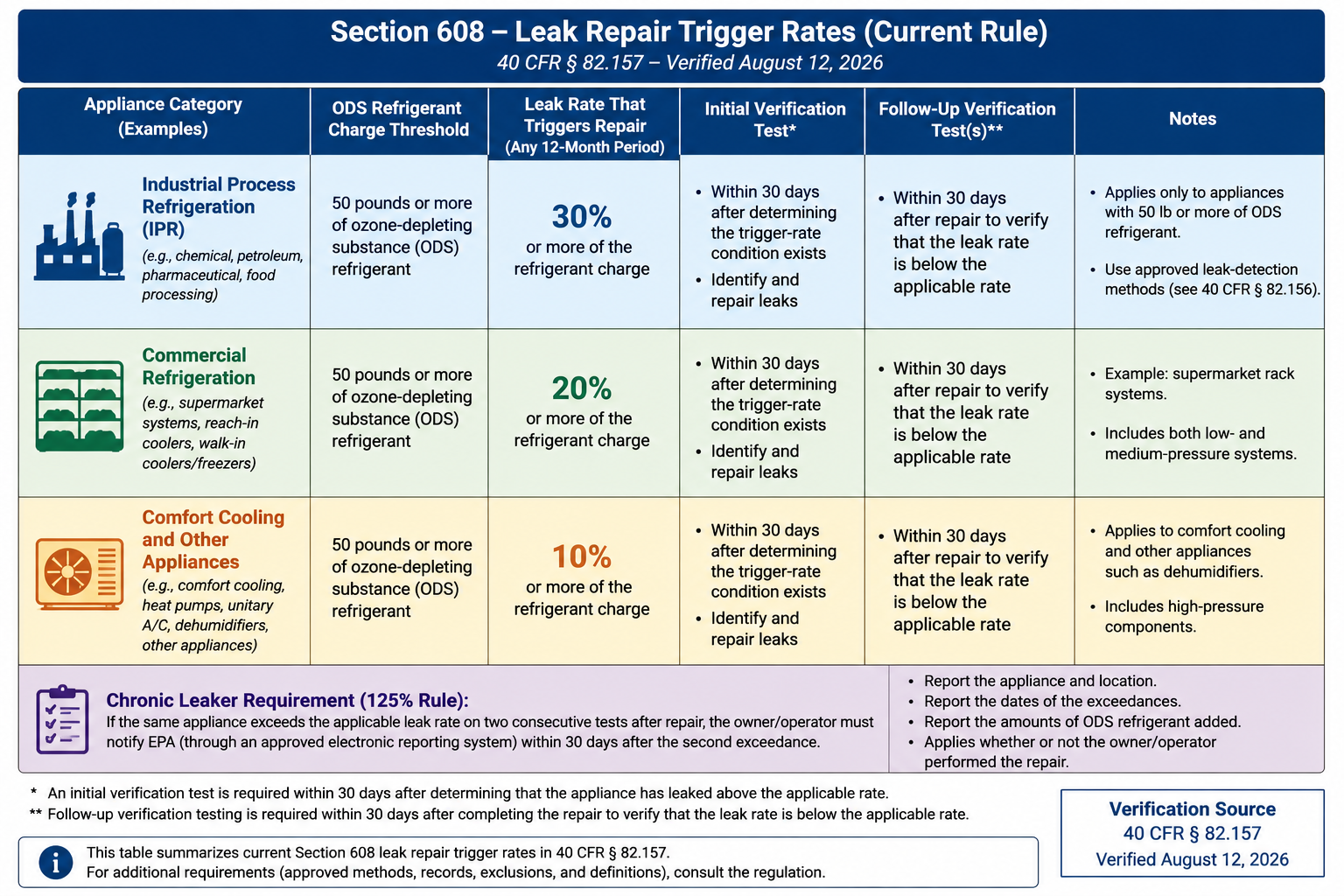
Figure 8.5.1 - Current Section 608 leak-repair trigger rates for qualifying ozone-depleting-refrigerant appliances.
AI-generated instructional figure: It may contain visual inaccuracies. Use the accompanying lesson text and cited authoritative sources to verify technical and regulatory details.
Figure 8.5.2
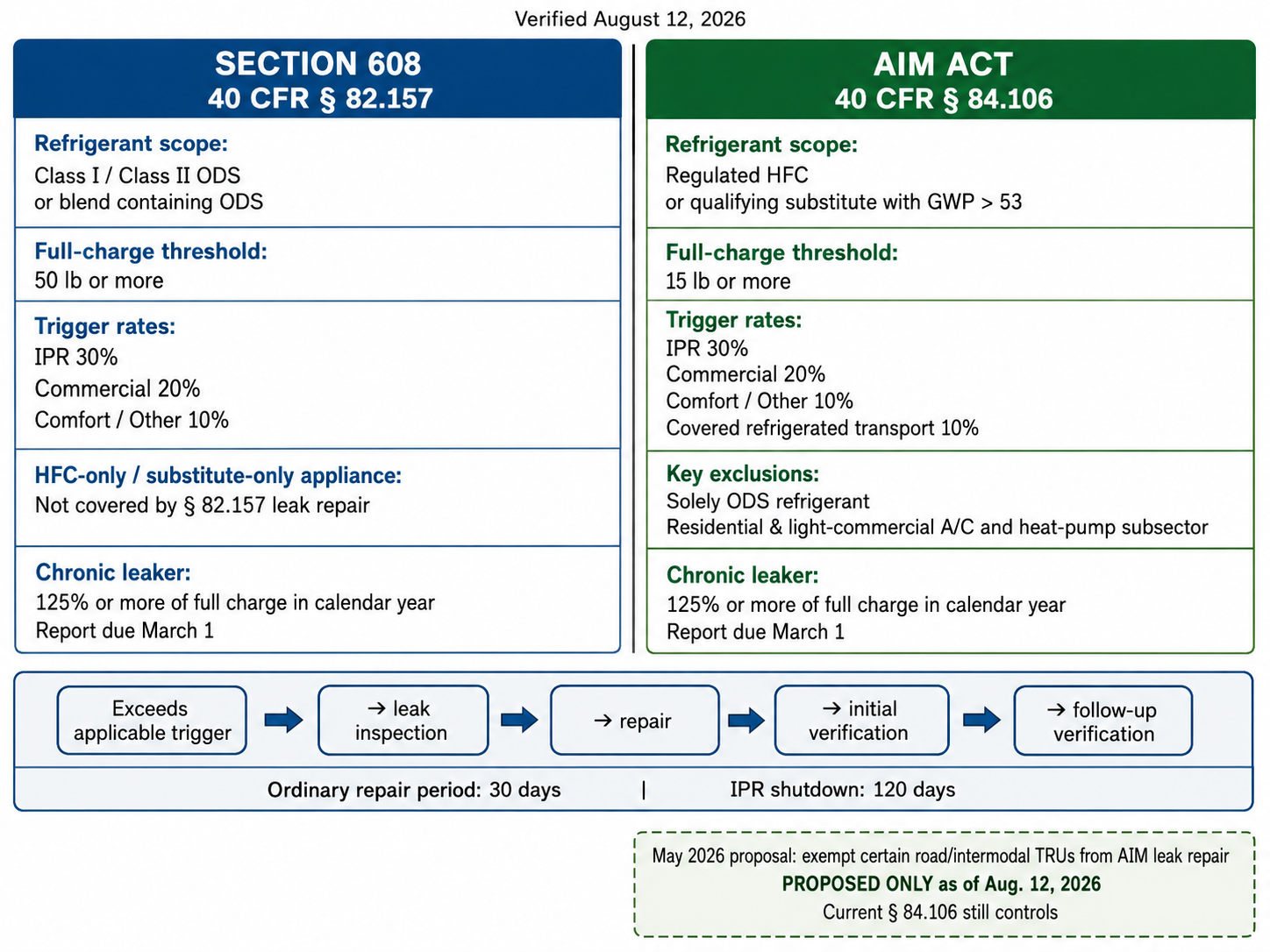
Figure 8.5.2 - Current Section 608 and AIM Act leak-repair frameworks compared.
AI-generated instructional figure: It may contain visual inaccuracies. Use the accompanying lesson text and cited authoritative sources to verify technical and regulatory details.
EPA 608 Exam Focus
What Students Must Remember
- Current § 82.157 Section 608 leak repair applies to qualifying appliances with 50 lb or more of class I or class II ODS refrigerant or a blend containing ODS.
- Current § 82.157 does not apply to appliances containing solely substitute refrigerants.
- Section 608 current trigger rates are:
- 30% industrial-process refrigeration.
- 20% commercial refrigeration.
- 10% comfort cooling.
- 10% other qualifying appliances.
- The ordinary repair period is 30 days.
- An IPR repair requiring an industrial-process shutdown can use the 120-day period specified by the rule.
- Covered leak repairs require initial and follow-up verification tests.
- The follow-up verification test is generally required within 10 days under the conditions stated in the rule.
- Section 608 chronic-leaker reporting is triggered at 125% or more of full charge in a calendar year for covered appliances.
- Chronic-leaker reports are due March 1 of the following year.
- Required § 82.157 records are generally retained at least 3 years.
- Historical 35% commercial/IPR and 15% comfort-cooling rates are not current.
- Beginning January 1, 2026, a separate AIM Act leak-repair program applies to qualifying appliances with 15 lb or more of covered HFC or qualifying substitute refrigerant.
- AIM Act trigger rates are also generally 30% / 20% / 10%, but applicability is different.
- Residential/light-commercial A/C and heat-pump appliances are excluded from current § 84.106 AIM leak repair.
- A May 2026 proposed refrigerated-transport exemption is not current law.
High-Priority Current Section 608 Table
| Exam Clue | Current Section 608 Answer |
|---|---|
| ODS appliance, 50 lb or more, IPR | 30% |
| ODS appliance, 50 lb or more, commercial refrigeration | 20% |
| ODS appliance, 50 lb or more, comfort cooling | 10% |
| ODS appliance, 50 lb or more, other covered appliance | 10% |
| HFC-only appliance | § 82.157 leak repair does not apply |
| Chronic leaker | 125% or more in calendar year |
| Chronic-leaker report | Due March 1 of following year |
| Historical commercial rate | 35% — historical, not current |
| Historical comfort-cooling rate | 15% — historical, not current |
Regulatory Classification Sequence
Refrigerant?
→ ODS or HFC/substitute?
Full charge?
→ 50 lb Section 608 threshold
→ 15 lb AIM threshold
Appliance category?
→ IPR / commercial / comfort / other
Applicable program?
→ § 82.157
or
→ § 84.106
Then apply trigger rate
Typical Exam Question Patterns
Students may be asked to:
- Identify the current commercial-refrigeration trigger rate.
- Identify the current industrial-process-refrigeration trigger rate.
- Identify the current comfort-cooling trigger rate.
- Recognize 35% and 15% as historical values.
- Determine whether a 50-lb ODS appliance reaches the current Section 608 full-charge threshold.
- Recognize that current Section 608 § 82.157 does not apply to HFC-only equipment.
- Identify the current chronic-leaker reporting threshold.
- Identify leak-repair recordkeeping as a Type II examination topic.
- Distinguish leak inspection from initial and follow-up verification testing.
- Recognize that current field HFC leak repair may arise under the AIM Act rather than § 82.157.
- Distinguish a proposed rule from a current requirement.
High-Risk Words
Pay particular attention to:
- Current
- Historical
- Section 608
- AIM Act
- ODS
- HFC
- 50 lb or more
- 15 lb or more
- Commercial refrigeration
- Industrial-process refrigeration
- Comfort cooling
- Trigger rate
- Calendar year
- Verification
- Proposed
Common Mistakes and Confusing Points
Mistake 1: Using 35% as the Current Commercial-Refrigeration Rate
Current Section 608 commercial refrigeration is 20%. The 35% value is historical.
Mistake 2: Using 35% as the Current IPR Rate
Current Section 608 IPR is 30%.
Mistake 3: Using 15% as the Current Comfort-Cooling Rate
Current Section 608 comfort cooling is 10%.
Mistake 4: Saying the Current Section 608 Threshold Is “More Than 50 Pounds”
The current § 82.157 applicability wording is 50 pounds or more.
Mistake 5: Applying § 82.157 Leak Repair to Every HFC Appliance
Current § 82.157 does not apply to appliances containing solely substitute refrigerants.
Mistake 6: Concluding That HFC Appliances Have No Leak-Repair Requirements
Beginning January 1, 2026, separate AIM Act § 84.106 requirements apply to qualifying HFC/substitute appliances.
Mistake 7: Applying the AIM Act to Every 15-lb HFC Residential Split System
Current § 84.106 excludes the residential/light-commercial air-conditioning and heat-pump subsector.
Mistake 8: Treating Type II Certification as the Same Thing as Leak-Repair Applicability
Type II determines technician-certification scope. Leak-repair applicability depends on the separate regulatory criteria.
Mistake 9: Confusing Leak Inspection With Verification Testing
Leak inspection identifies leak locations. Verification tests demonstrate that repairs hold.
Mistake 10: Treating 125% as an Allowed Leak Rate
The 125% value is a chronic-leaker reporting threshold, not the ordinary repair trigger.
Mistake 11: Confusing Calendar-Year Chronic Leakage With the Annual Leak-Rate Trigger
The 125% chronic-leaker report uses a calendar-year total. The ordinary trigger rate is a separate leak-rate calculation.
Mistake 12: Treating the May 2026 TRU Proposal as Current Law
The May 2026 road/intermodal TRU exemption remains proposed. Current § 84.106 still controls.
Mistake 13: Assuming Similar Percentages Mean Section 608 and AIM Are One Program
They are separate regulatory frameworks with different refrigerant scopes and charge thresholds.
Mistake 14: Assuming Leak-Repair Exclusion Means Venting Is Permitted
Leak-repair applicability and the venting prohibition are separate legal questions.
Concept-Check Questions
Question 8.5-1
A commercial-refrigeration appliance contains 300 lb of R-22. Which current Section 608 leak-rate trigger applies?
A. 10%
B. 15%
C. 20%
D. 35%
Question 8.5-2
Which statement correctly describes the current § 82.157 full-charge threshold?
A. The rule applies only when the appliance contains more than 50 lb.
B. The rule applies to qualifying ODS appliances with 50 lb or more.
C. The rule applies to every HFC appliance with 15 lb or more.
D. The rule applies only to appliances with 500 lb or more.
Question 8.5-3
A Type II appliance contains only an HFC refrigerant. Which statement is most accurate regarding current § 82.157?
A. It is automatically subject to the § 82.157 leak-repair rule.
B. It is not subject to § 82.157 leak repair solely because § 82.157 currently excludes substitute-only appliances; separate AIM Act applicability must be checked.
C. It may be intentionally vented.
D. It is automatically a Type I appliance.
Question 8.5-4
What are the current Section 608 trigger rates for industrial-process refrigeration, commercial refrigeration, and comfort cooling, respectively?
A. 35%, 35%, 15%
B. 30%, 20%, 10%
C. 20%, 30%, 15%
D. 10%, 20%, 30%
Question 8.5-5
Which statement about current covered Section 608 leak repairs is correct?
A. Initial verification is required, but follow-up verification is prohibited.
B. Initial and follow-up verification tests are required for covered repairs.
C. Verification testing applies only to Type I appliances.
D. A bubble test performed before the repair automatically replaces both verification tests.
Question 8.5-6
A covered appliance leaks 125% of its full charge during one calendar year. What value does 125% represent?
A. The ordinary commercial-refrigeration repair trigger.
B. The ordinary comfort-cooling repair trigger.
C. The chronic-leaker reporting threshold.
D. The maximum recovery-cylinder fill percentage.
Question 8.5-7
Which statement best describes the separate AIM Act leak-repair framework?
A. It is simply another name for § 82.157.
B. It generally uses a 15-lb full-charge threshold for qualifying HFC or certain substitute appliances, subject to exclusions.
C. It applies only to R-22 appliances.
D. It has no verification-test requirements.
Question 8.5-8
An older study guide lists a 35% commercial-refrigeration trigger rate with no current verification date. What is the best project response?
A. Use 35% as the current answer because the book is printed.
B. Average 35% and 20%.
C. Label 35% as historical and use the current 20% Section 608 value when the question asks for the current requirement.
D. Ignore all leak-repair questions.
Answers and detailed explanations will be provided in
8.15 - Answers and Explanations.md.
Section Summary
Current leak-repair requirements must be understood as two separate federal frameworks plus a layer of historical study-guide material.
Current Section 608 — 40 CFR § 82.157
Applies to qualifying appliances with:
50 lb or more
of class I/class II ODS refrigerant or a blend containing ODS.
Current trigger rates:
IPR → 30%
Commercial refrigeration → 20%
Comfort cooling → 10%
Other covered appliances → 10%
Covered repairs require:
- Leak inspection.
- Repair within the applicable period.
- Initial verification.
- Follow-up verification.
- Records.
Chronically leaking covered appliances that leak:
125% or more of full charge in a calendar year
must be reported to EPA by:
March 1 of the following year
Current AIM Act — 40 CFR § 84.106
Applies beginning January 1, 2026 to qualifying appliances with:
15 lb or more
of regulated HFC or certain qualifying substitutes, subject to exclusions.
Important exclusions include:
- Solely ODS refrigerant.
- Residential/light-commercial A/C and heat-pump subsector.
The AIM Act uses similar 30% / 20% / 10% trigger categories but is legally separate from Section 608 § 82.157.
Historical Values
Older study materials may show:
35% commercial
35% IPR
15% comfort
These are historical, not current Section 608 trigger rates.
The correct exam and field practice is:
Identify date
→ identify refrigerant
→ identify full charge
→ identify appliance category
→ identify applicable regulation
→ then apply the correct leak rate
References
Current Clean Air Act Section 608 Sources
-
U.S. Environmental Protection Agency, Stationary Refrigeration Leak Repair Requirements, verified August 12, 2026.
-
U.S. Environmental Protection Agency, Recordkeeping and Reporting Requirements for Stationary Refrigeration, verified August 12, 2026.
-
U.S. Environmental Protection Agency, Regulatory Updates: Section 608 Refrigerant Management Regulations, verified August 12, 2026.
-
U.S. Environmental Protection Agency, Section 608 Test Topics, verified August 12, 2026.
-
Electronic Code of Federal Regulations, 40 CFR § 82.157 — Appliance Maintenance and Leak Repair, verified August 12, 2026. The eCFR displayed Title 40 as up to date through August 10, 2026 at the time of verification.
Current AIM Act Sources
-
Electronic Code of Federal Regulations, 40 CFR § 84.106 — Leak Repair, verified August 12, 2026.
-
Electronic Code of Federal Regulations, 40 CFR Part 84, Subpart C — Management of Regulated Substances and Certain Substitutes, verified August 12, 2026.
-
U.S. Environmental Protection Agency, American Innovation and Manufacturing Act: Leak Repair Requirements for Appliances Containing Hydrofluorocarbons and Certain Substitutes, January 2026 fact sheet, verified August 12, 2026.
-
U.S. Environmental Protection Agency, Resources for Managing HFC Use and Reuse, verified August 12, 2026.
-
U.S. Environmental Protection Agency, Regulatory Actions for Managing HFC Use and Reuse, verified August 12, 2026.
-
U.S. Environmental Protection Agency, Frequent Questions on the Phasedown of Hydrofluorocarbons, verified August 12, 2026.
Current Proposed-Rule Status Source
- U.S. Environmental Protection Agency / Federal Register, Phasedown of Hydrofluorocarbons: Excluding Road and Intermodal Container Transport Refrigeration Units from the Hydrofluorocarbon Leak Repair Requirements, proposed rule published May 26, 2026. Verified August 12, 2026 as proposed, not final.
Project Teaching and Historical References
-
Rex Miller and Mark R. Miller, HVAC Licensing Study Guide, 3rd ed., historical leak-repair table showing 35% commercial refrigeration, 35% industrial-process refrigeration, and 15% comfort cooling. These values are retained only as historical study-guide context.
-
International Training Institute for the Sheet Metal and Air Conditioning Industry, EPA Section 608 Study Guide, Type II leak-repair and examination-preparation material. Historical regulatory numbers in the guide are not treated as current authority.